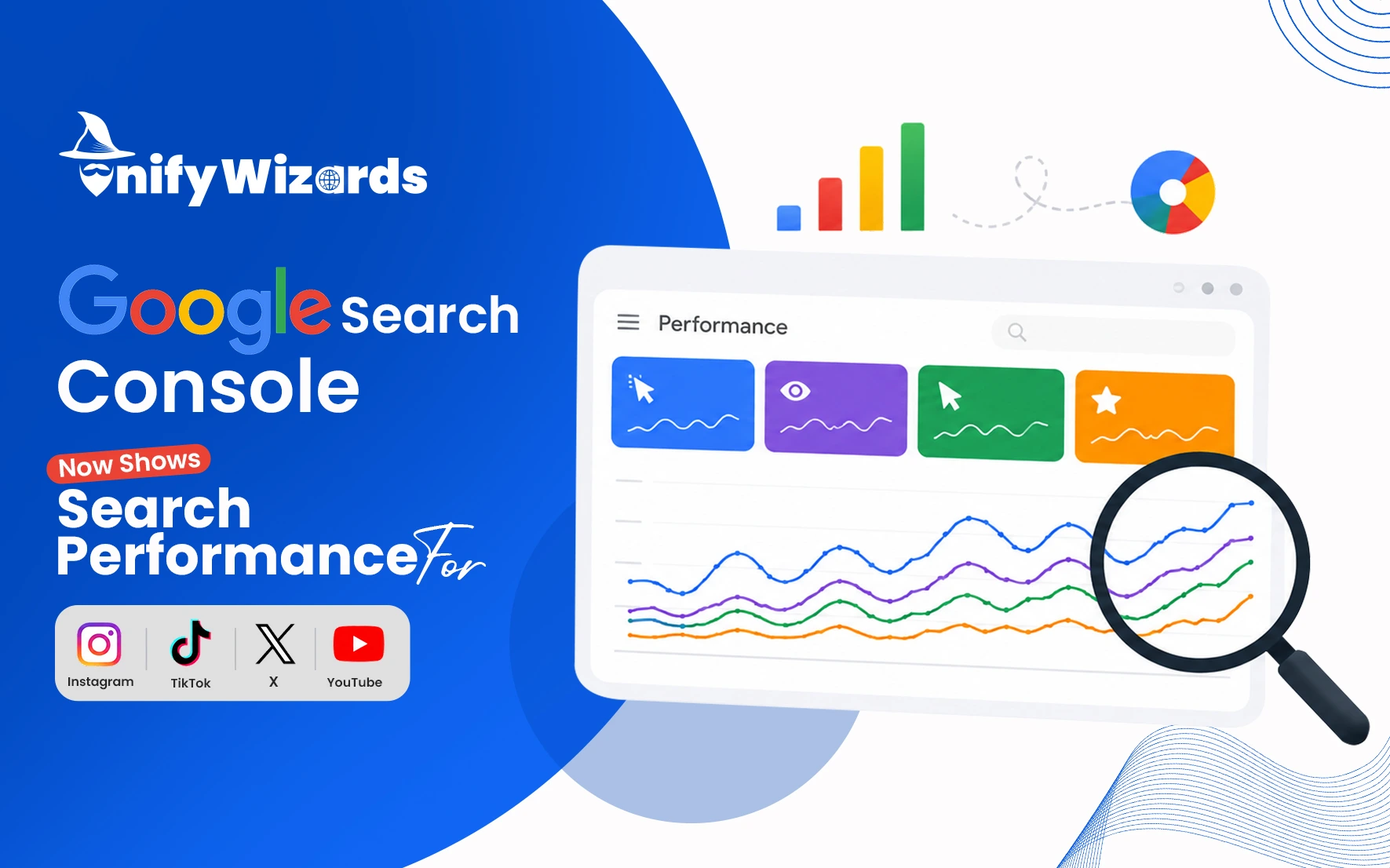
Google Search Console Now Tracks Instagram, TikTok, X and YouTube; Update
There is something very annoying which has been going on for years. You would have been showing up i...
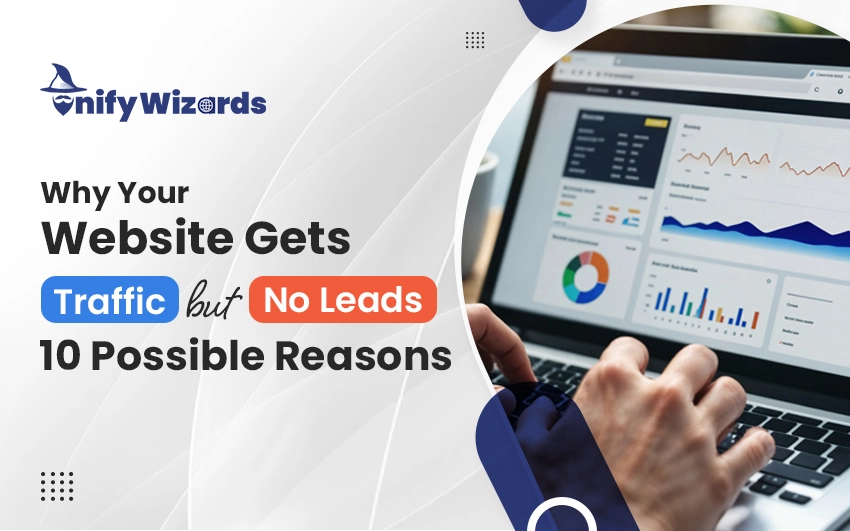
Traffic is good because you see your figures rise and your chart shows promising results. And then you investigate your enquiries and there is nothing. Yes, this is the most frustrating problem in digital marketing, but it is also one of the most common.
On average, websites only convert 2.35% of traffic into leads. Statistically, the websites that perform well convert at 11.45% or higher. This huge difference cannot be justified by the amount of traffic. Your SEO services could be working flawlessly, but the problem lies in the actions that make people leave without taking an action.
This guide tells you the reasons for why is it all happening. Read further to find the loophole in your practice:
The reason why your website receives traffic, but no leads is that the incoming visitors are either on the wrong demographic, going to the wrong landing pages, or running into obstacles that prevent them from taking action. Simply increasing the traffic level will do nothing about this.
The conversion rate for all industries is expected to be 2.35% in 2027. If yours is below 1%, you definitely have some blockers that need to be addressed.
Traffic that doesn’t convert is generally traffic that isn’t meant to convert. Information searchers, researchers, and general search traffic that simply isn’t interested in purchasing anything.
This is the worst possible diagnosis as it indicates that something you’ve built into your site; whether it's your content, ad targeting, or keyword strategy, works in practice but fails in commerce. If your top-performing pages are blog entries and your services pages see little traffic, you are drawing in visitors rather than customers.
Segment your traffic according to its intent and develop different conversions paths for each type of visitor!
Visitors make a decision in five seconds about whether they should continue their visit or not; and if your headline does not communicate who you serve, what you do, and why it is important for the visitors to stay, they will leave without reading anything else on the page.
Muddled messaging is a top conversion issue, but the least addressed one. "Welcome to our website" is not a value proposition; "We help [your target customer] achieve [their desired result] without [their pain]" is. The gap between these two types of messaging is the gap between staying and bouncing.
Poorly written, general, or difficult to locate calls to action account for a large number of leads that could have been generated; because a visitor who is curious but not directed will go elsewhere and will not return.
Every landing page requires one call to action which is well defined and clearly visible to the visitor. "Contact us" is poorly written. "Get a free website analysis" is a good call to action. "Learn more" provides no information to the visitor. "Find out how we solved this problem for similar companies" provides a reason.
A one-second delay in page load time decreases conversions by 7.2%. The faster a page loads, the higher conversions it achieves. Don’t only stress over optimizing your website for big screens, make sure the load speed is good for mobiles as well.
Check your site using Google PageSpeed Insights now. A score of your mobile version less than 70 is not just an inconvenience from a technical point of view. This is a conversion leak which happens to the majority of your customers every day. Optimize images, remove render-blocking scripts, and use CDN services. There is nothing technically advanced about it, try once!
As stated by BrightLocal, in their survey of 2026, 97% of consumers do some kind of research in the form of reviews prior to connecting with a business, while 68% need to have a minimum of four stars to even think about doing something. A website without social proof is basically a website without any reasons to trust it.
Testimonials, case studies, company logos, ratings, awards; they are not decorations; they make your website visitor into a lead generator. And don’t place them far away from your call-to-action buttons.
Each additional question on your contact form lowers the chances that it will be filled out by your potential customers. If you are asking them their business size, their annual income, and where they heard about you, before you've even convinced them that they want to talk, you are not qualifying them!
Use three questions to begin with. Their name, their email address, and what they need. That should be enough to get started talking.
In 2026, AEO and GEO (Answer Engine Optimization and Generative Engine Optimization) have become as important as traditional SEO for capturing high-intent traffic. AI Overviews now reduce position-one organic click-through rates by 58%, according to Ahrefs analysis of 300,000 keywords.
Both AEO and GEO counter this challenge. Content written in such a way that it would be used in answering queries through AI searches via schema markup, direct Q&A format, and authoritative citations, would target those users who are using AI-based search engines and not clicking on the regular search results. If your website is not optimized for search behavior in 2026, then you are missing out on some part of your high intent traffic.
If a visitor clicked an advertisement for a certain service and landed on the home page of your site, he has been disappointed even before reading one word on your website. Specific landing pages for particular offers, keywords, and intents of the traffic sources yield much higher conversions compared to general pages.
Dedicated landing pages for particular services, campaigns, and audiences always win over generic pages. It should be exactly what visitors were expecting to see after clicking.
Conversion occurs in just 3% of the visitors that come to your website for the first time through a contact form. On the contrary, 97% of the visitors are somewhere in their research, comparisons, and considerations, and your website does nothing for them except making it easy for them to leave.
If you ask for an email address in return for something truly valuable, like a guide or a checklist or an audit, etc., then you have a mechanism to remain connected with such visitors. An explorer that has subscribed to some of your offerings and has received three good emails within two weeks is bound to convert rather than simply leaving your website and being retargeted again with the same ad.
A good digital marketing company that understands the problem of traffic without leads doesn't begin by increasing the amount of traffic. It first checks for any possible issues with the conversion process itself. From messaging and speed to CTAs and other elements, everything is checked and double-checked before deciding to increase the volume of traffic into a funnel unable to cope with what it is getting now.
At Unify Wizards, we have come across this kind of situation many times in the past. There was a lot of traffic; there weren't enough leads. The solution was never more traffic; it was determining why those who visited were not converting and addressing those problems accordingly.
There is something very annoying which has been going on for years. You would have been showing up i...
An abrupt revolution is going on in Digital marketing in 2026. The firms with outdated strategies fo...

Over the past decade, life has been more about performance than presence. The pressure to perform is...
It has been proven by several brands that customers respond better to display advertising. Wi...